Regenerative Agriculture in Burgundy: How Soil Health Could Transform Viticulture, According to Armand Heitz
As heatwaves become increasingly frequent in France, climate change and soil depletion are making the adaptation of vineyards an ever more pressing issue. Regenerative agriculture invites growers to rethink the way vines are cultivated. It is not simply about changing how soils and vines are treated, but about restoring the agronomic balance of an entire farm. In Burgundy, this approach relies in particular on organic matter, grape variety diversity, hedgerows, cover crops and integration with livestock. What if the future of wine began beneath our feet?
A Burgundian winegrower, farmer, oenologist and agronomist, Armand Heitz is experimenting with this approach on his land. In this interview, he explains what it means for soils and vines, the role of animals, the costs involved and the tensions it can create with the traditional appellation system. For him, it begins above all with changing the way we look at soil.
Armand Heitz spoke to Grand Cru and Etiquette on 10 September 2026.
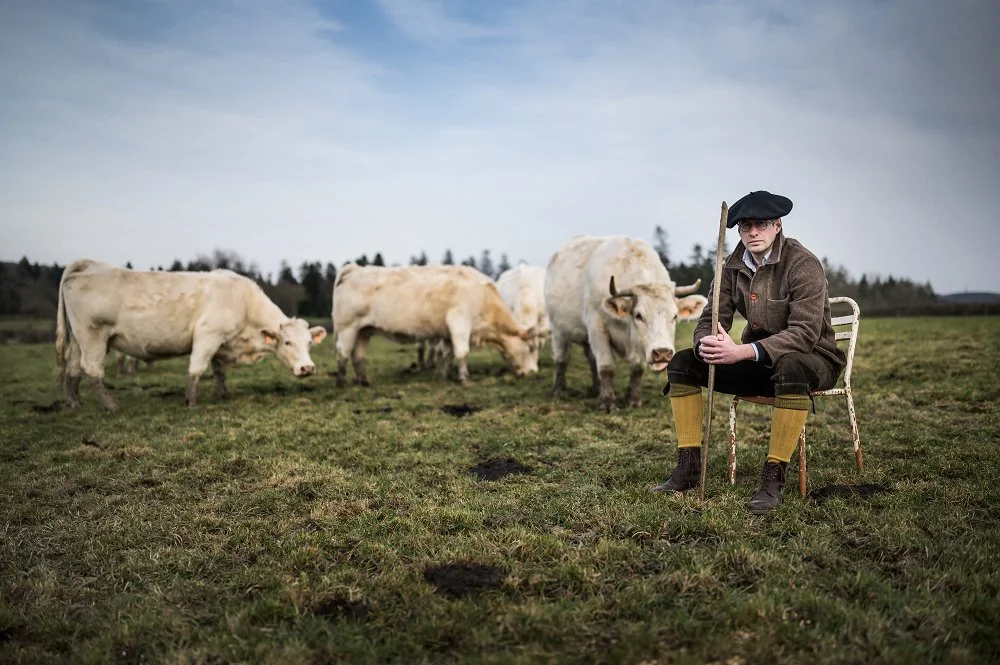
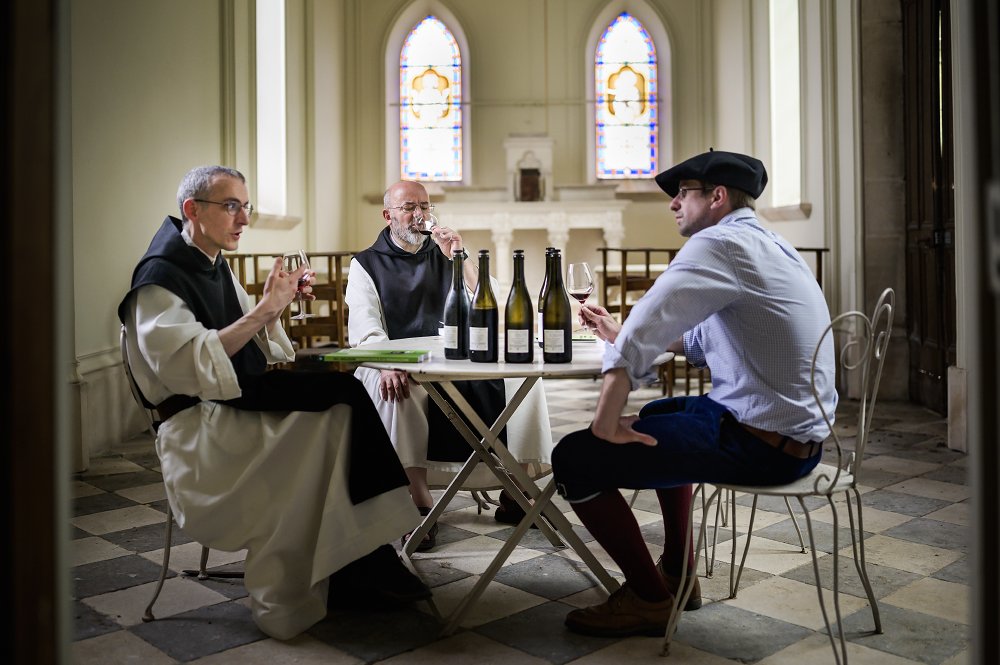
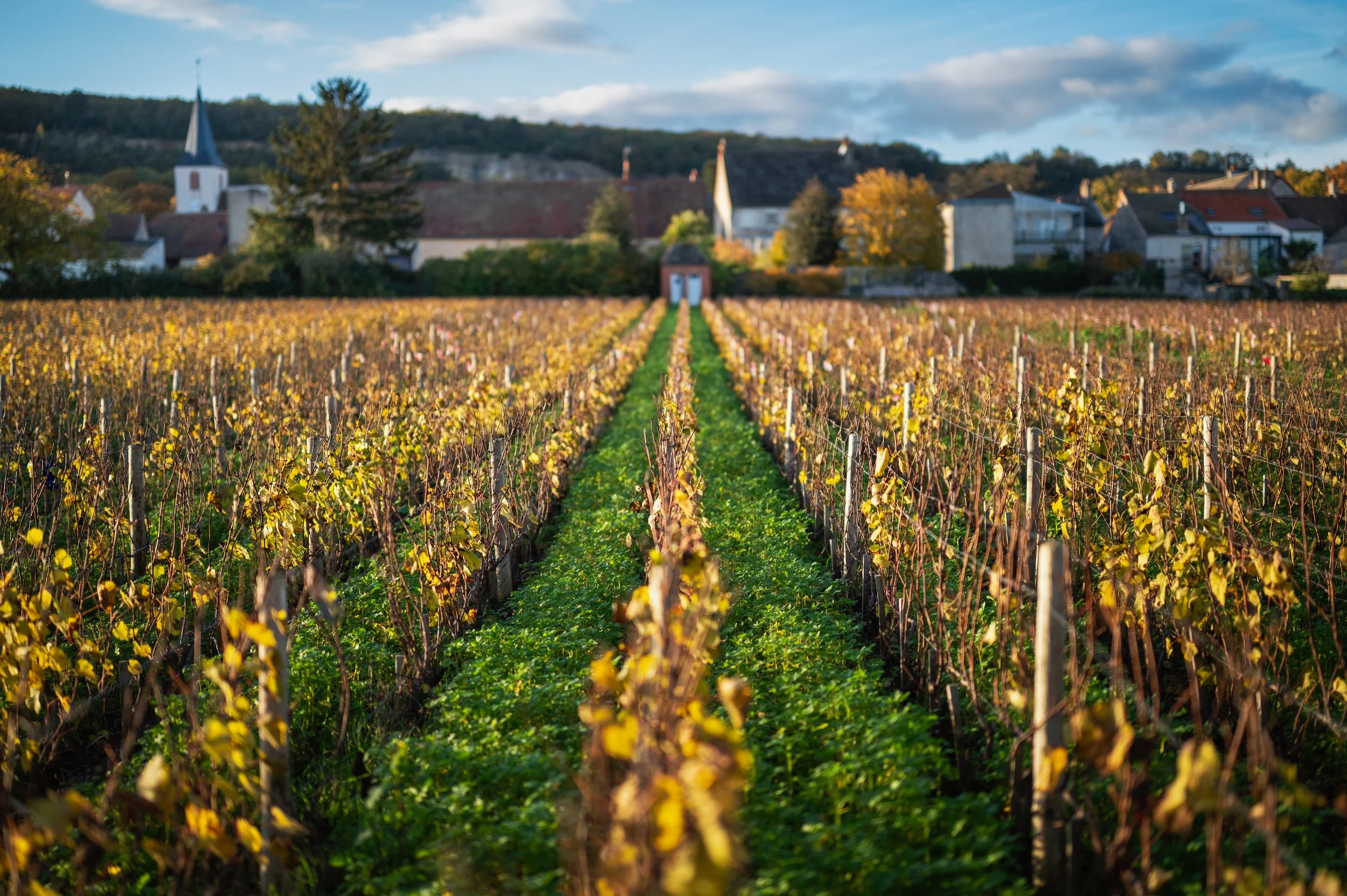
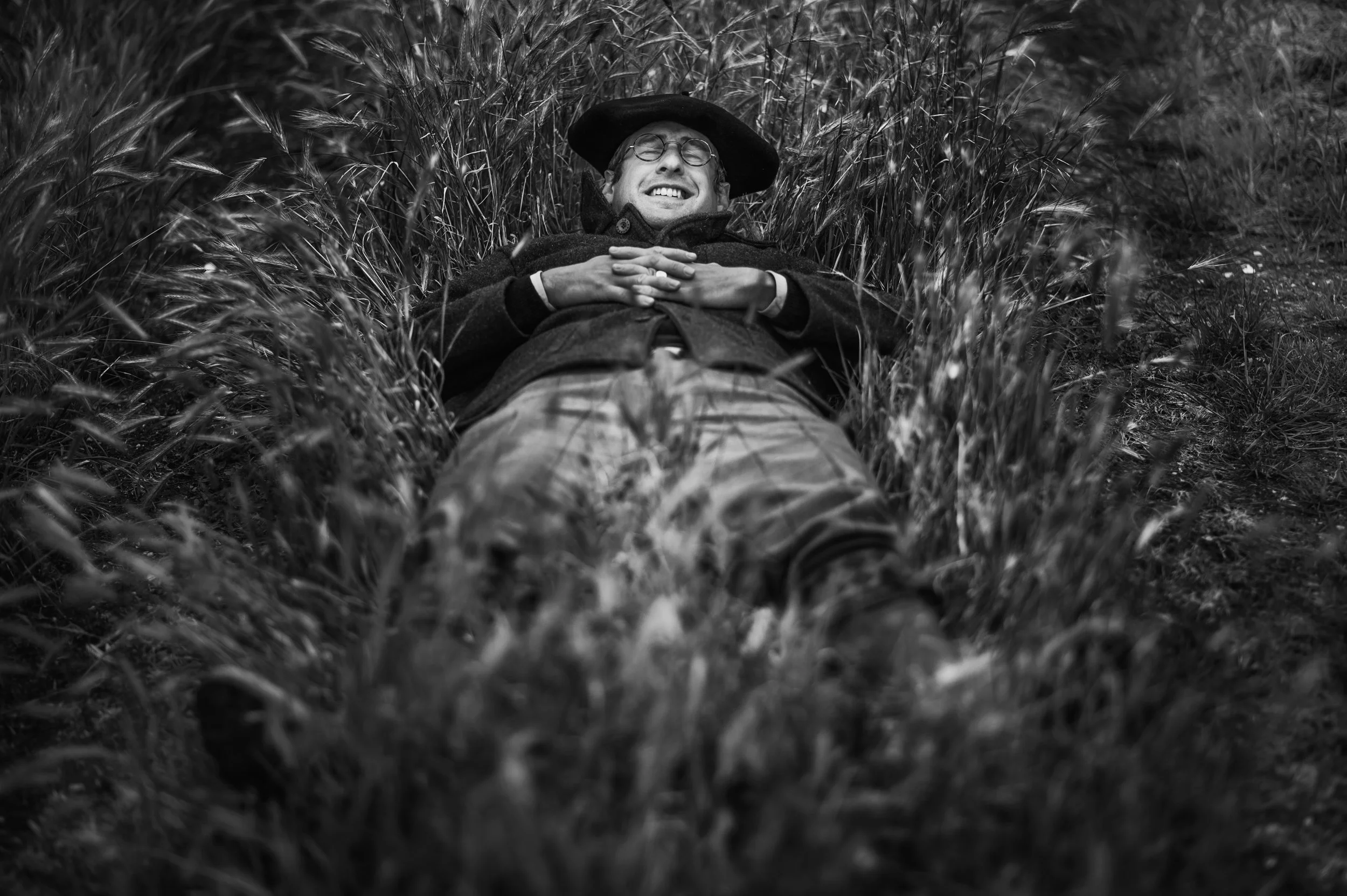
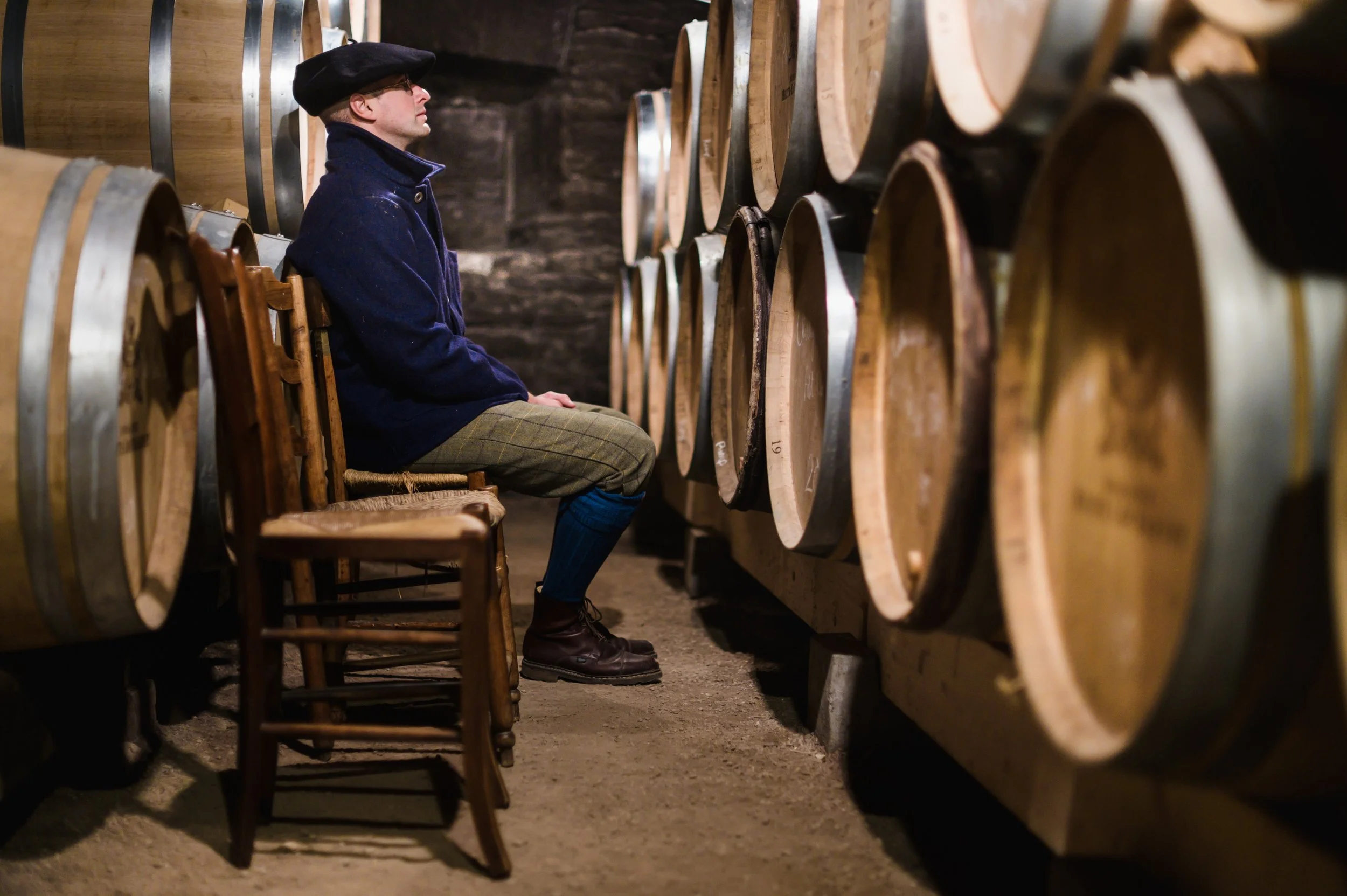
Photo © Armand Heitz
Regenerative Agriculture and Living Soils
Armand Heitz defines regenerative agriculture as “agriculture that tries to repair the damage caused by humans”. This approach starts from a simple observation: over several decades, intensive farming has profoundly altered soils and agricultural ecosystems. For the winegrower, it is now time to return to the land and regain a degree of self-sufficiency.
For him, this observation goes beyond agronomy alone. Over the past sixty years or so, he believes, Western civilisation has become disconnected from nature: “We left the countryside for the city, and we no longer know what a meadow is, what a cow pat is, what an insect is, what manure is, or even what a vegetable grown in the ground looks like. We need to return to the land.”
The concept of a living soil lies at the heart of this thinking. Soil is not simply made up of clay, silt and sand. It is also home to bacteria, insects, fungi and earthworms. Its structure, degree of compaction, ability to allow air to circulate and organic matter content all determine how it functions.
In the vineyard, these factors are crucial. “You can have been organic for forty years and still have compacted, dead soil,” says Armand Heitz.
Regenerative agriculture, therefore, is not simply about eliminating certain products. It seeks to restore the functions of the soil and make the agricultural system as a whole more self-sufficient.
From Organic Farming to Biodynamics and Regenerative Agriculture
This outlook is the result of a long process of reflection. Trained as an oenologist and agronomist, the winegrower completed his three years of study in Switzerland before settling in the Côte de Beaune, where he produced his first vintage in 2013.
From the outset, he practised biodynamic farming for six years. He also spent three years exploring permaculture, following in the footsteps of Bill Mollison, as well as Masanobu Fukuoka’s natural farming.
His thinking then evolved. On rereading Rudolf Steiner, the founder of biodynamics, he took away one decisive idea: before considering biodynamic principles, there must first be a sustainable agricultural model — in other words, one that is self-sufficient.
Armand Heitz gradually moved away from approaches he felt had become too dogmatic, returning instead to agronomic fundamentals: soil structure, organic matter and microbial life. He now describes himself as a farmer — someone who uses common sense and naturally strives towards a self-sufficient, sustainable farm.
Restoring Soil Fertility and Soil Health
One of the key differences between organic and regenerative agriculture lies in the attention paid to the actual condition of the soil.
According to Armand Heitz, it is not enough to monitor the products being used. You also need to know what is happening beneath the surface: is the soil compacted? Is it sufficiently aerated? Does it contain enough organic matter? Is its microbial life active?
He compares the situation to that of a doctor who, instead of carrying out a blood test, simply looked at what their patient bought at the supermarket. This approach therefore puts soil fertility and vitality at the centre of agricultural thinking.
In the vineyard, the difference can be decisive for the plant. In the glass, however, it is much harder to perceive. In a blind tasting, he suggests, 95 to 98% of consumers would be unable to tell whether a wine came from a living soil or a dead one. He himself admits that there are times when he cannot make the distinction and finds a wine excellent even though it comes from a form of viticulture he considers agronomically unsatisfactory.
The issue, therefore, is primarily a long-term one: living soil enables vines to remain healthier year after year, whereas depleted soil eventually reaches a point where it can no longer support anything.
A Vineyard Integrated into a Living Farm
Regenerative agriculture does not stop at the vineyard plot. It leads to a rethink of the farm as a whole, with animals playing a central role. “There is no farm without animals,” says Armand Heitz bluntly.
Manure, grazing and crop rotation create interactions between the different components of the farm. The aim is to become more self-sufficient in terms of fertilisation.
This search for synergies extends beyond the vineyard. He brews beer with Brasserie de France in Beaune and collects the spent grain to feed his animals. “I’m not inventing anything,” he remarks.
These practices belong to a form of agriculture that has always existed: using available resources, combining activities and creating cycles between crops and livestock. “The agriculture of tomorrow is the agriculture of yesterday.”
Regenerative Agriculture: Practical Farming Practices
Restoring soils depends on an accumulation of practices rather than a single solution.
On his estate, Armand Heitz sows cover crops, plants hedgerows and has been applying substantial amounts of organic matter for several years. He is also renewing his vineyards and seeking suitable rootstocks.
All these practices follow the same logic: improving the farm’s ability to operate sustainably and cope with changes in its environment. The aim is not to reproduce a theoretical model exactly, but to restore agronomic balances suited to the land.
Grape Variety Diversity for Climate-Resilient Vineyards
Grape variety diversity is another pillar of this strategy. Armand Heitz grows ten grape varieties on his estate — an unusual approach in Burgundy within the same terroir.
This diversification takes on particular importance as the climate warms. Not all grape varieties respond to heat in the same way. In 2026, for example, his Chardonnay suffered badly during spells of hot weather that arrived as early as flowering. His Pinot Blanc vines fared better: harvested ten days later, they benefited from a little rainfall and retained good levels of acidity.
This experience has reinforced his approach: diversifying grape varieties reduces dependence on a single variety and increases the vineyard’s ability to adapt. For the past five or six years, he has also been working on vineyard renewal, rootstocks and the grape varieties best suited to the new conditions.
Adapting Burgundy Vineyards to Climate Change
Climate change adds another dimension to the thinking around soil. Above 35°C in Burgundy, the winegrower observes, conditions become extremely difficult for ecosystems: insects, birds and plants are all affected.
Vines do have a certain resistance to drought and heat, inherited from their Mediterranean origins. But that does not mean vineyards can remain unchanged as the climate evolves.
For Armand Heitz, the answer therefore lies in preparation. Organic matter, grape variety diversity, vineyard renewal and the choice of rootstocks: work undertaken several years before climatic events occur can make vineyards more resilient today.
“I suffered like everyone else,” he acknowledges, before adding that his agronomic choices have probably made him “a little more resilient than the others”.
Hybrid Grape Varieties and the Future of Burgundy Viticulture
Grape variety diversification nevertheless raises a particularly sensitive issue in Burgundy: appellations. Armand Heitz deliberately plants certain plots outside the appellation system and advocates the use of hybrid grape varieties.
These varieties, he argues, could help reduce pesticide use while providing greater scope for adapting to the climate. He goes so far as to advocate incorporating 10, 15 or 20% hybrid varieties into a Meursault, which, he says, could reduce treatments by a third.
The proposal comes into direct conflict with the rules and established practices of the appellation system. A former president of the Chassagne growers’ union, he says he was pushed aside at the end of his term, partly because of his views on changing grape varieties and vine-training methods. He regrets what he sees as a system that is insufficiently open to change.
The winegrower experienced this inertia at first hand. When he planted his first wide-spaced vineyard in 2016, in a village known for its conservative outlook, fellow growers approached him at a union meeting to ask whether he intended to make Crémant — even though this planting method was already permitted. One of them had sworn that he would never take the step; today, more and more winegrowers are adopting it.
The benefits are nevertheless well established, he insists: wider spacing makes mechanisation easier, reduces soil compaction and lowers the need for inputs. These are all benefits, he says, that have been documented in the scientific literature for thirty or forty years, while Burgundy is only now at the trial stage when it comes to planting densities.
Soil Health and Burgundy’s Appellation System
For Armand Heitz, the problem is not merely agronomic; it is also commercial and cultural. The plots he farms outside the appellation system are less successful than those carrying a prestigious name. “People would still rather drink Meursault from soil that is dying than a Vin de France made without pesticides,” he laments.
The power of the Meursault name, he continues, matters even more than that of Chardonnay alone. From this, he draws a conclusion: the rules could evolve without necessarily undermining the identity of the appellations.
He compares the situation with Champagne, which he considers more advanced in certain respects. Burgundy, he says bluntly, is “forty years behind”.
And he sees a direct danger in this. The region’s international reputation and strong demand for its wines cannot, in his view, justify standing still. “If we carry on like this, in forty years there won’t be a single vine left in Burgundy,” he warns.
The Cost of Regenerative Agriculture: Skills, Labour and Investment
The transition to regenerative agriculture is not cost-free. Armand Heitz estimates that it requires at least 30% more investment than for a fellow grower who makes no changes to their practices. And the main cost is human.
Some agricultural skills have become scarce. He cites tree pruning: people capable of doing it properly are difficult to find. Added to this are the costs associated with cover crops, hedgerows and equipment.
Some changes can nevertheless generate savings: eliminating an energy-intensive operation from a production system is one example, providing a direct and immediate saving.
The ideal model nevertheless remains difficult to achieve — indeed, the winegrower acknowledges that he has experimented with an approach that he now considers economically unviable.
Regenerative Agriculture: Skills and Knowledge Beyond Investment
Regenerative agriculture is not necessarily restricted to farms with substantial financial resources.
Armand Heitz emphasises the work carried out by many small family estates. On some farms where a father, mother and son work together, he says, remarkable practices make it possible to produce excellent-quality products at lower cost.
The issue is also one of passing on knowledge and skills. Regenerative agriculture requires time, expertise and the ability to observe the farm as a whole. It means knowing how to work the soil, maintain trees and hedgerows, manage livestock, choose crops and gradually adapt the vineyard.
The agricultural transition is therefore as much a question of skills as it is of capital.
The Role of Public Policy in Regenerative Agriculture
The agricultural transition does not depend solely on farmers, Armand Heitz argues: it is also largely a matter for public authorities. Yet, he laments, they do little to support the planting of hedgerows, the establishment of cover crops or greater awareness of the importance of soil health. Above all, he criticises what he sees as a lack of understanding of agronomy.
One inconsistency particularly angers him: France bans certain pesticides for its farmers while allowing the import of products containing them. It should be the responsibility of policymakers, he argues, to ban those products from entering the country, rather than placing the burden solely on consumers.
Finally, he denounces the influence of lobbies. He contrasts the position of a scientist such as Marc-André Selosse, who has no budget, with that of representatives of major agrochemical companies, which have considerable resources with which to approach decision-makers. In his view, politicians should not allow themselves to be influenced in this way.
Regenerative Agriculture, Wine Prices and Consumer Choices
Then there is the question of price. The market dictates the rules, Armand Heitz sums up: people want the cheapest product possible, and “when you make something as cheaply as possible, you cannot make it excellent”.
He sees this as an almost deeply embedded instinct, inherited from ancestors accustomed to scarcity, which encourages people to buy as cheaply as possible and in as large a quantity as possible — the same impulse, he says, behind fast fashion and promotional offers. Only a small proportion of the population, he observes, questions where a product comes from and whether the producer is being fairly paid. This is why he is so critical of those in positions of responsibility who shift the burden on to the buyer: making consumers responsible for their diet amounts to ignoring this underlying conditioning.
The winegrower also urges us to put the Western model into perspective. On a global scale, he points out, a large proportion of agriculture remains small-scale and peasant-based, while many products — coffee, chocolate and tobacco — still come from countries that have not experienced, and perhaps never will experience, an agricultural industrial revolution. From this perspective, industrialised countries are not necessarily the best students when it comes to agronomy.
Regenerative Agriculture and the Climate Emergency
For him, the urgency extends far beyond viticulture. “Sixty years of intensive agriculture completely destroy the soil; we won’t last another sixty years, otherwise we’ll become a desert.” He admits that he does not know whether there is still time to reverse the trend.
But those with the necessary resources must, in his view, begin this transformation. He cites Cheval Blanc in Bordeaux in particular for its work with trees, reduced tillage, the presence of animals and the creation of a genuine farm. Even an estate with substantial resources nevertheless remains dependent on its surroundings: if the neighbouring forest burns, it burns too.
This limitation is a reminder that agricultural resilience cannot be considered solely at the level of an individual plot or farm.
Is Regenerative Agriculture the Future of Burgundy Viticulture?
Ultimately, the question extends beyond the individual case of winegrower Armand Heitz.
Regenerative agriculture proposes a different way of thinking about agricultural production: restoring soils rather than simply seeking to maintain their productivity; diversifying rather than depending on a single grape variety; combining crops and livestock rather than keeping them separate; and seeking greater self-sufficiency.
In Burgundy, this approach still faces deeply entrenched practices, particularly around appellations and grape varieties. But climate change is already forcing winegrowers to think about the resilience of their vineyards. Grape variety diversity, organic matter, cover crops, hedgerows, livestock and suitable rootstocks are all levers being explored by Armand Heitz.
Above all, his journey shows that regenerative agriculture is not a single technique. It is a way of viewing the farm as an ecosystem and placing soil health at the heart of agricultural decision-making. The approach comes at a cost. It requires skills. It challenges certain established practices and can create tensions with existing frameworks.
But for Armand Heitz, it responds to a necessity that goes beyond economic or commercial concerns: the need to still be able to farm tomorrow. Ultimately, his motivation can be summed up in a single sentence: not to leave his children “a burning rubbish dump”.
You may also like