Vin Jaune from the Jura: The Veil, the Clavelin and the Secrets of Château-Chalon
Made from the Savagnin Blanc grape, Jura vin jaune is a dry white wine aged for at least six years and three months in oak, without topping up – that is, without the barrel ever being refilled. Beneath a veil of yeast that protects the wine as much as it transforms it, it develops its signature notes of walnut and curry. It is recognisable by its emblematic 62cl bottle, the clavelin. Produced under four appellations – Arbois, Côtes du Jura, L’Étoile and Château-Chalon, the most demanding – Jura vin jaune is defined by its exceptional capacity to age and by its food pairings, above all with Comté and chicken with morels. In 2026, Château-Chalon celebrates the ninetieth anniversary of its appellation, in the very summer its rules were rewritten.
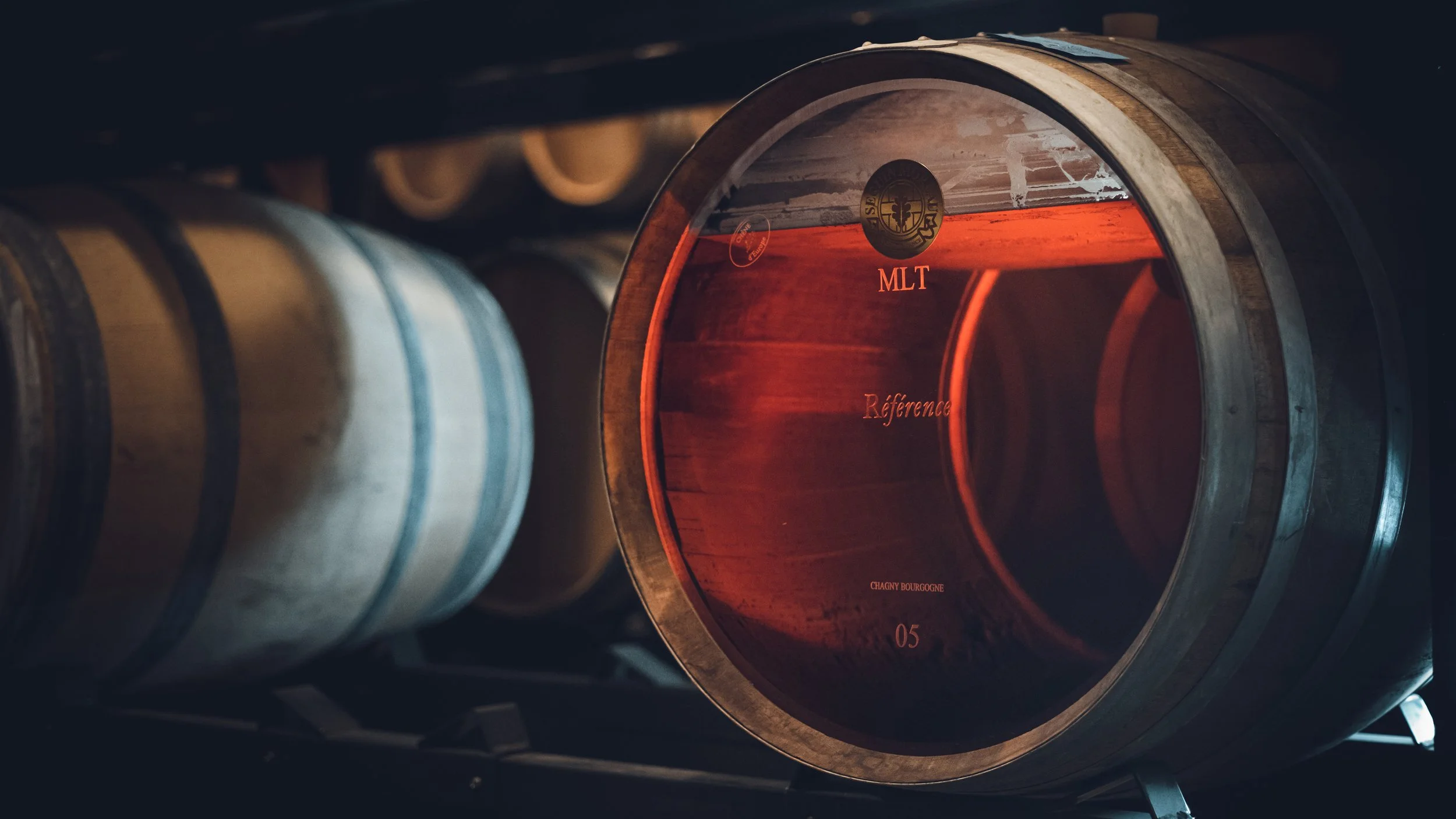
Photo © Maison du Vigneron
What Is Vin Jaune?
Vin jaune (roughly van zhohn, “yellow wine”) is a dry white wine. The point is worth making: its colour and its reputation often lead people to expect a sweet wine, or a fortified one like port. The specifications say otherwise: a vin jaune may contain no more than 3 grams of sugar per litre, and no spirit is ever added. Nor should it be confused with its Jura neighbours. Vin de paille is a sweet wine made from dried grapes. Macvin is grape must fortified with Jura marc.
Vin jaune is not an appellation but a designation reserved for four Jura appellations. Three of them place it after their name: Arbois vin jaune, Côtes du Jura vin jaune, L’Étoile vin jaune. The fourth, Château-Chalon, has no need to: it makes nothing else. All follow the same fundamental rule – ageing in oak, without topping up, until 15 December of the sixth year after the harvest, including at least sixty months under the veil. Custom rounds this to “six years and three months”. The wine may not be sold before 1 January of the seventh year. The 2019 vintage, therefore, reached wine merchants only in January 2026.
Savagnin Is Not Sauvignon Blanc
Vin jaune is born of a single grape, Savagnin Blanc, often mistaken for Sauvignon. It belongs in fact to the Traminer family. Its pink form gave Alsace the Klevener de Heiligenstein, and its aromatic variant is known the world over as Gewurztraminer. Its age was confirmed in 2019 by a genetic study: a medieval seed unearthed near Orléans proved identical to today’s Savagnin Blanc. The variety has therefore been propagated by cuttings, unchanged, for at least nine centuries. In the Jura, its presence is recorded in 1717. Names long travelled from one grape to another: the oldest written mention of Pinot Noir in the region, in 1385, calls it “savagnin noir”.
Savagnin is no longer entirely alone. Two old varieties may now enter vin jaune in small proportions: Enfariné, a black grape, in Arbois since 2022, and Enfariné with Gringet in the Côtes du Jura since 2022 and in Château-Chalon since 11 August 2026. They fall under a scheme governed by an agreement with INAO, the French appellation authority. In Château-Chalon they are capped at 10% of the blend – 20% for estates of under three hectares – and the label may not name them. Only L’Étoile still requires Savagnin alone.
Ageing Under the Veil: Where Does the Taste of Vin Jaune Come From?
Savagnin can give three very different wines depending on a single decision: whether or not to keep the barrel full. The grower who tops it up – ouillé, in Jura parlance – replacing each month the wine that has evaporated, obtains a fresh, fruity white sold as Savagnin ouillé. Let the level fall for a few years and the result is a Savagnin sous voile, already marked by walnut. Push that logic beyond six years and the wine becomes vin jaune.
Everything happens in the empty space beneath the bung. The wood absorbs part of the wine, air reaches the surface, and yeasts weave a veil that stands between the wine and the oxygen. The result is a slow, controlled oxidation. This has nothing to do with a wine oxidised by accident, where air eventually turns alcohol into vinegar: under the veil, the alcohol remains and gives the wine its body. Vin jaune is in this sense a cousin of fino sherry, also aged under a veil of yeast, with two differences – the grape, and the absence of any added spirit. The veil is not inert: its yeast populations change over the years, and those that die enrich the wine. The taste known locally as goût de jaune rests chiefly on two molecules – ethanal, which brings notes of apple, and sotolon, which brings walnut and curry. The specification adds candied fruit and spices: cinnamon, vanilla, nutmeg.
Soil and climate do the rest. Savagnin gives its best on the grey and blue marls of the Lias, ancient clay-limestone seabeds that the geologist Michel Campy has described commune by commune in Terroirs viticoles jurassiens. Barrels often age without temperature control, and the wide swing between winter and summer – named in the specifications as a factor in the goût de jaune – acts directly on the veil. With time, the colour moves from bright pale yellow to old-gold reflections, what the official texts call a “mordoré” hue.
The mystery fascinated Arbois’s most famous son. Louis Pasteur, who founded the science of fermentation, studied the wine at length in his Études sur le vin. The Château-Chalon specification quotes his admission that the careful study of this wine and the conditions of its making was among those that had most enlightened him on the general properties of wine.
Why Does the Clavelin Hold 62cl?
The Château-Chalon specification offers a simple explanation: 62 centilitres is what remains of one litre of wine after six years of ageing without topping up. This explanation, often repeated in Jura cellars, carries a symbolic force: the clavelin would tell not of a volume, but of time.
Historians are more cautious. A loss of 38% in six years far exceeds the ordinary “angels’ share”, which runs to a few per cent a year. Claude Royer, author of a reference work on vin jaune, files the equivalence among oral traditions. Other explanations exist. The so-called “English” bottle held around 65 centilitres in the seventeenth century. The chauveau, an old liquid measure of the Jura and Burgundy, came close to 62 centilitres. Clavelins were blown by hand at the La Vieille-Loye glassworks, which had held the privilege since 1506. And the most illustrious bottle of vin jaune, the 1774 vintage, is not a clavelin at all: it is an 87-centilitre Burgundy-style bottle.
The format almost vanished. In 1973, European harmonisation of bottle sizes left no room for a 62cl bottle. Saving it took twenty years of lobbying. In 1993, a delegation of Jura growers, among them Jacques Richard, travelled to Strasbourg with fifteen kilos of Comté and twenty-five clavelins of Château-Chalon. The exemption was granted on 21 October 1993. Today the clavelin is reserved for vin jaune alone, and in Château-Chalon it bears the appellation’s name moulded into the glass.
How to Serve Vin Jaune: Temperature, Decanting and Food Pairing
After more than six years under the veil, vin jaune tolerates air far better than most white wines. It often gains from being opened, or even decanted, in advance, and it keeps better than a conventional white once the bottle has been started.
It should be served neither ice-cold, which closes its notes of walnut and spice, nor at room temperature, where the alcohol takes over: around 14–16 °C (57–61 °F), a little warmer for an older wine. A generous white-wine glass suits it better than a flute or a small tasting glass.
At table, vin jaune calls for dishes with assertive flavours. The Jura wine council recommends Comté, ideally long-aged, walnuts, foie gras, snails and shellfish. Its signature pairing remains Bresse chicken with vin jaune and morels, where the wine is both in the glass and in the sauce. This is the dish behind the “vin jaune sauce” now found on restaurant menus far from the Jura: a cream sauce finished with vin jaune, usually with morels, served with poultry or fish. Sweetbreads and coq au vin jaune play in the same register, and its curry note opens the door to spiced cuisines. Philippe Troussard, Meilleur Ouvrier de France sommelier at Les Caudalies in Arbois, describes it as a wine in “dialogue with the plate”.
As for ageing, the specifications do not speak lightly: a vin jaune, they state, can keep in bottle “for 50 or 100 years” with its qualities intact. The most spectacular proof is a 1774 Arbois vin jaune, judged “an unaltered monument” by twenty-four tasters at more than two hundred years old, then sold at auction in 2011. Upright or on its side, it asks above all for a cool, dark cellar.
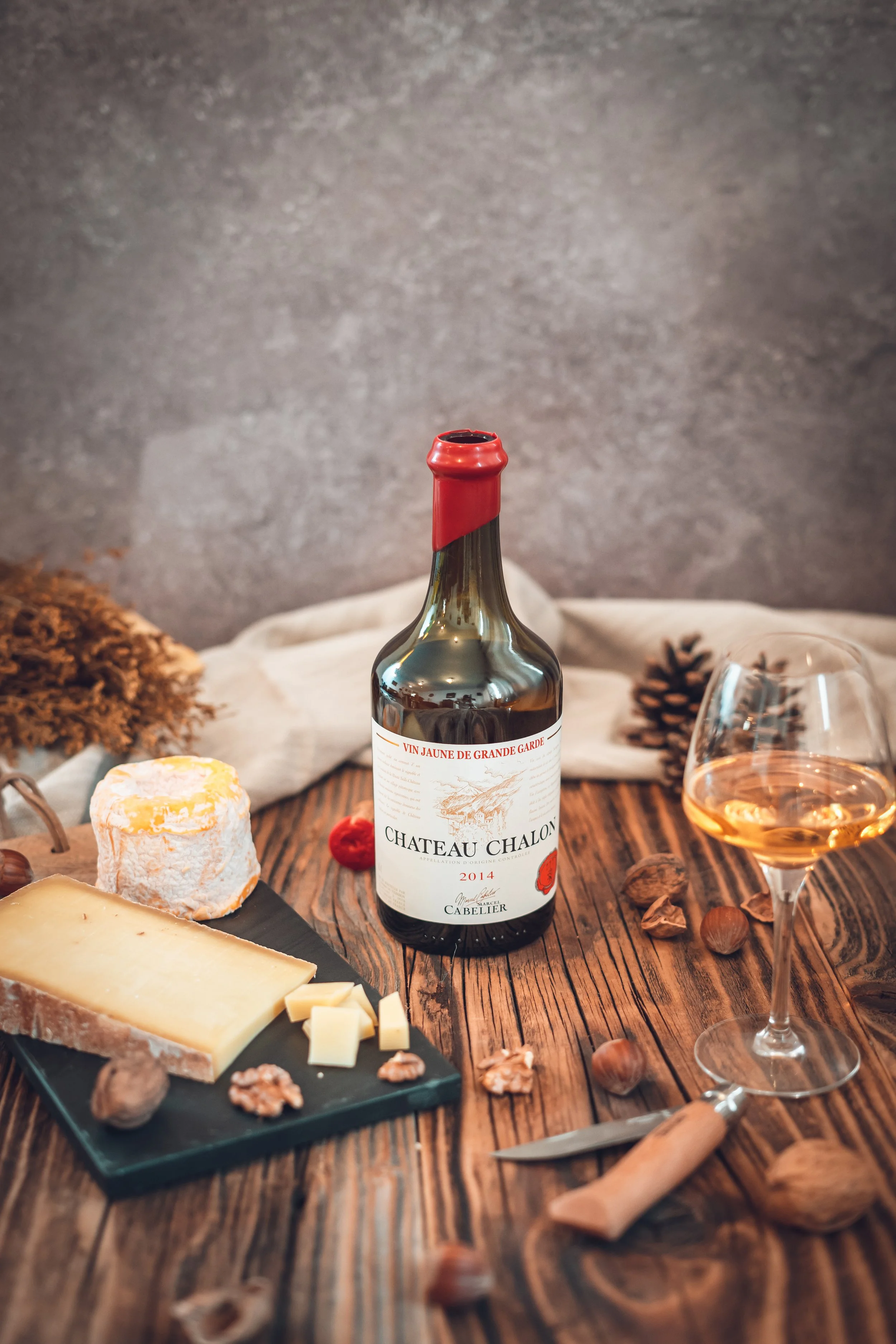
Photo © Maison du Vigneron
Which Vin Jaune to Buy – and What to Use Instead in Cooking
The first criterion is the appellation. Château-Chalon remains the most demanding: riper grapes (at least 204 grams of sugar per litre of must, against 161 elsewhere), a yield capped at 40 hectolitres per hectare and a ban on oak chips. Arbois and the Côtes du Jura produce most of the volume. L’Étoile is the most confidential: around 70 hectolitres of vin jaune in 2009, according to its specification – barely more than ten thousand clavelins.
The second criterion is the producer. In the Jura, production is shared between independent growers (46%), cooperatives known as fruitières (27%) and négociant houses (27%). Only about a tenth of Jura wine is exported, which explains why vin jaune can be hard to find outside France. A supermarket vin jaune is not a counterfeit: it obeys the same specification as the one sold by a specialist merchant. The difference lies in the house style, the choice of plots and the handling of the veil – not in the rules. Nor does négoce mean anonymity. The Maison du Vigneron, a négociant and winemaking house taken over in 1986 by the Helfrich family, claims the largest vin jaune hall in the world: 2,200 square metres and nearly 4,000 barrels under the veil, according to the house.
The third criterion is the vintage. In 2026, the new release is the 2019, a year marked, according to the Maison du Vigneron, by frost and rain – hence small volumes, but a lively acidity that bodes well for ageing under the veil. The 2020 arrives on 1 January 2027.
Then there is the price, which sometimes surprises. A 62cl clavelin compares poorly with a 75cl bottle: brought back to that format, and to more than six years of capital tied up in the cellar, the price of a vin jaune makes more sense.
For cooking, the question changes. There is no point pouring a great Château-Chalon into a sauce: its perfume fades with long cooking, and a vin jaune from Arbois or the Côtes du Jura is enough, ideally added towards the end. Failing that, the most faithful substitute is a Savagnin sous voile, made from the same grape. Outside the Jura, some chefs suggest a mix of dry white wine and dry sherry, which imitates its oxidative character without reproducing it.
Château-Chalon and Vin Jaune: What Is the Difference?
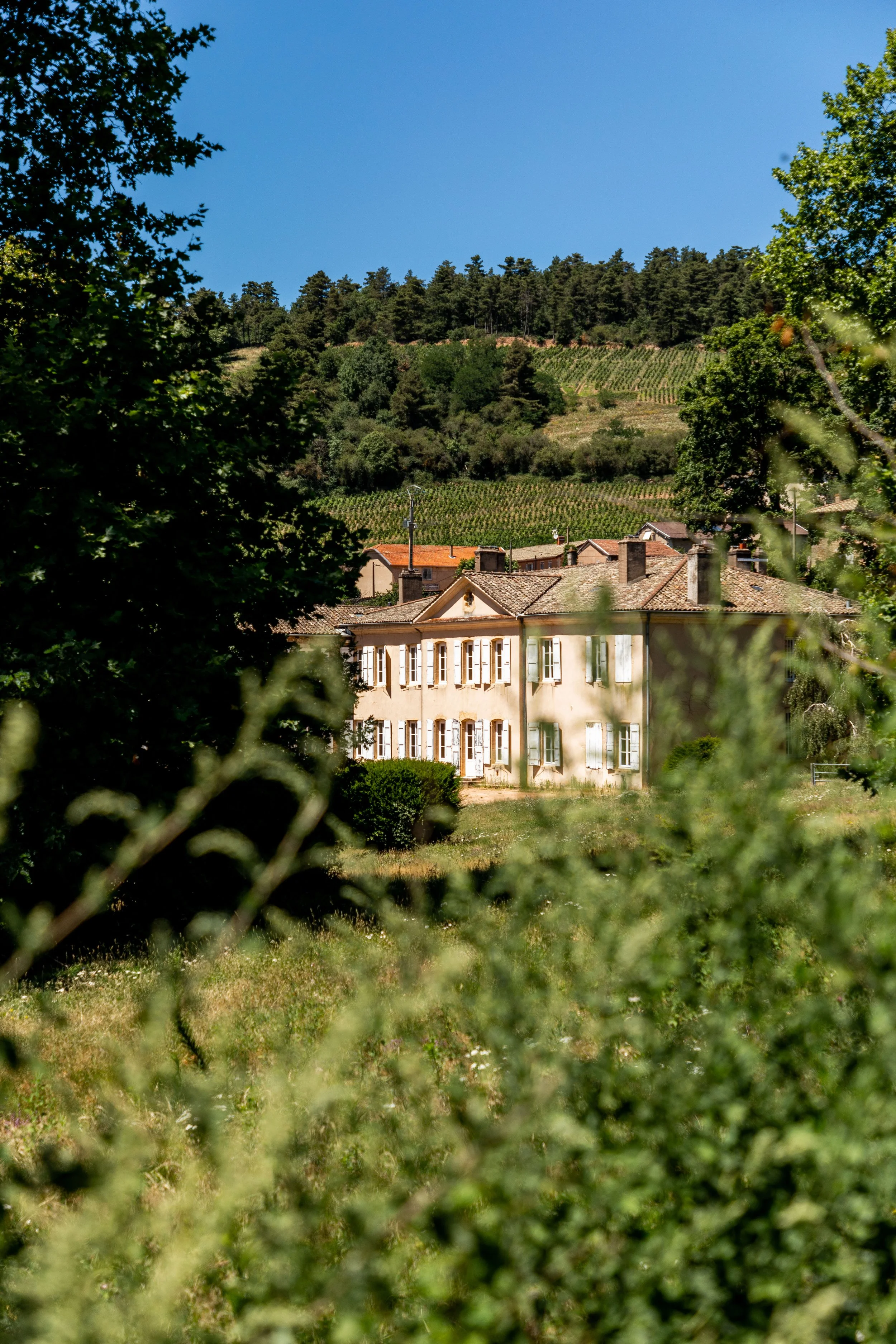
Despite its name, Château-Chalon is not a château: it is a medieval village, listed among the Plus Beaux Villages de France, perched on a limestone promontory at the mouth of the Baume-les-Messieurs valley. It gave its name to an appellation spanning four communes: Château-Chalon, Domblans, Menétru-le-Vignoble and Nevy-sur-Seille. Its vineyard covers 55 hectares according to the Comité Interprofessionnel des Vins du Jura (based on the areas declared for the 2023 harvest), producing around 1,500 hectolitres a year according to the 2026 product specification. Nor has it anything to do with Chalon-sur-Saône, in Burgundy.
A red Château-Chalon? There is no such thing. The appellation is reserved for “still white wines known as vins jaunes”. The only black grape it now admits, Enfariné, may enter only in a small share of a wine that remains white.
Château-Chalon and vin jaune are not two separate categories: a Château-Chalon is always a vin jaune. It is even the cradle of the style, where the method was probably perfected in the eighteenth century before spreading to Arbois. Above all, it is the only Jura appellation devoted entirely to vin jaune, and the most tightly regulated.
Château-Chalon is sometimes presented as France’s first appellation. That title belongs to Arbois, recognised on 15 May 1936 alongside Cassis, Châteauneuf-du-Pape, Cognac, Monbazillac and Tavel. Château-Chalon followed a few days later, in May 1936. The sources themselves hesitate between the 29th and the 31st: the specification cites both dates.
Metternich is said to have declared that the best wine in the world came from Château-Chalon. The line is repeated everywhere, on labels and in sommelier courses, addressed sometimes to Napoleon I, sometimes to Napoleon III. No contemporary source records it, and the first version is impossible: Metternich only received his Johannisberg estate, where the scene is set, in 1816, after the Emperor’s fall. It is a fine legend, and the appellation has never needed to correct it.
Château-Chalon Turns Ninety: What Has Changed
Château-Chalon’s administrative history begins before the law. The producers’ union was founded on 14 May 1933, three years before the appellation was recognised. From 1952, the growers adopted a demanding rule: a commission that visits every plot a few days before harvest to judge its condition, its yield and its ripeness.
On 7 June 2026, the appellation’s growers celebrated the anniversary in Menétru-le-Vignoble, with a day in the vines under the motto “90 years, 90 people, 90 emotions”. The organisers summed it up in a line the appellation could take as its creed: Château-Chalon does not follow its era, it defies it. As part of the celebrations, the geologist Michel Campy and the teams of the Maison du Vigneron and the Domaine de Savagny met to compare their views on Savagnin.
The anniversary also coincided with a regulatory turning point. The order of 11 August 2026 replaced the 2011 text. Château-Chalon becomes a Protected Designation of Origin, its yield rises from 30 to 40 hectolitres per hectare, and Savagnin may now be joined by a small share of Enfariné and Gringet. An appellation that claims to stand outside time has thus rewritten its rules in the summer of its ninetieth year, to face a climate that is changing fast. Another project is on the way: the Maison de la Haute Seille, in Château-Chalon, is to house the future Cité des Vins du Jura.
1974, 1980, 1984, 2001: The Vintages That Never Were
The 1952 commission is no formality. When the harvest does not seem worthy of the name, the union gives up the appellation for the whole year. This has happened four times: in 1974, 1980, 1984 and 2001. In those years, no clavelin bears the name of Château-Chalon. The wine is not lost: it may be sold under another Jura appellation, such as Côtes du Jura. Giving up its own name rather than cheapening it is perhaps the surest sign of an appellation’s seriousness. The 2011 specification recorded these four vintages. The 2026 text, more administrative, keeps no trace of them.
Difficult years remain a reality. According to the Maison du Vigneron, 2017, 2019, 2021 and 2024 combined spring frost with rain and reduced harvests to very little. The house nevertheless sees an opportunity for vin jaune: humidity preserves a high acidity, the very quality that allows the wine to survive six years under the veil. The 2026 vintage poses the opposite question. Under the heatwave, the house explains, the clay marls compacted and locked water deep in the soil, and the vines suffered from drought. Its profile will only reveal itself on release, in January 2033.
Sources:Château-Chalon PDO specification, approved by the order of 11 August 2026 (JORF, 15 August 2026): https://info.agriculture.gouv.fr/boagri/document_administratif-80d3d5a7-3798-4166-b191-9373c5690bbbChâteau-Chalon AOC specification, decree no. 2011-1187 (repealed version): https://www.sv-jura.com/medias/aoc/cahier-des-charges/CDC_CHATEAU_CHALON_V2.pdfArbois PDO specification (2022): https://www.sv-jura.com/medias/AGRT2221731A-CDC-Arbois-09092022.pdfCôtes du Jura AOC specification (2022): https://www.sv-jura.com/medias/aoc/cahier-des-charges/CDC-Cotes-du-Jura-20-09-2022.pdfL’Étoile AOC specification: https://www.sv-jura.com/medias/aoc/cahier-des-charges/L_Etoile_CDC.pdfComité Interprofessionnel des Vins du Jura, “Le vignoble du Jura” infographic (2024) and professional brochure (2009)INRAE, Roman and medieval grape seeds, 2019: https://www.inrae.fr/en/news/dna-ancient-roman-and-medieval-grape-seeds-reveals-unexpected-links-modern-grape-varietiesINAO, the first six AOCs: https://www.inao.gouv.fr/en/expo-90ans/9-six-premieres-aocSAQ, the Savagnin grape: https://www.saq.com/fr/contenu/inspiration/culture-vigne/cepage-savagninMichel Campy, Terroirs viticoles jurassiens. Géologie et paysages, Mêta Jura, 2018Claude Royer, Le vin jaune. Miracle de la nature ou fruit d’un savoir-faire ?B. Pujol, J. Levaux, J.-F. Bourdy, lot 314 notice, “Un vin jaune d’Arbois du millésime 1774”, 2011Hebdo39, “L’AOC Château-Chalon célèbre ses 90 ans”: https://hebdo39.net/economie-au-coeur-des-vignes-laoc-chateau-chalon-celebre-90-ans-dhistoire/Hebdo39, “Quatre villages pour une appellation d’exception”: https://hebdo39.net/chateau-chalon-quatre-villages-pour-une-appellation-dexception/Jura Tourisme, the Plus Beaux Villages de France of the Jura: https://www.jura-tourism.com/sejour/decouverte-des-plus-beaux-villages-de-france-du-jura/Schloss Johannisberg, estate history: https://schloss-johannisberg.de/en/historyMaison du Vigneron, correspondence with the marketing team, July 2026
You may also like