
200 Years of Paris Dining: A Historian Explains Why the Map Keeps Changing
In Conversation with Loïc Bienassis,
Historian and Research Officer at the European Institute for the History and Cultures of Food (IEHCA, University of Tours)
— May 2026 There is no fixed centre to Parisian culinary life. The neighbourhoods that concentrate the most sought-after tables shift over time — but the ones that fall out of favour do not stop having restaurants. They simply cease to be the place to be.
“It is true and false at the same time,” says Loïc Bienassis: true because the most coveted establishments change address, false because the underlying logic never does.
It is from this vantage point that he observes Paris — not as a capital that reinvents itself, but as a city whose culinary geography has obeyed the same social structures for the past two centuries
The first great centre of the modern restaurant was the Palais-Royal district at the end of the eighteenth century. That neighbourhood gradually ceded its dominance to the Grands Boulevards — the boulevard des Italiens above all. Then, towards the close of the nineteenth century, the most prestigious establishments followed the city’s elites westward, towards the Champs-Élysées and the Bois de Boulogne. This permanent mobility is one of the constants of Parisian culinary history.
The Restaurant Follows the Elite
To understand why a neighbourhood becomes gastronomic, one must look beyond the restaurants themselves. The success of the Palais-Royal was not solely a matter of the quality of its tables: the district concentrated shops, gaming rooms, cafés, theatres, and entertainment. The Grands Boulevards followed the same logic — playhouses, promenades, new forms of sociability. “The restaurant is inscribed within the social life of elites,” Bienassis observes. The principle illuminates certain contemporary specialisations as well. If the 8th arrondissement retains its association with institutional power and business lunches, the reasons are not purely culinary.
The bistronomie movement of the 2000s belongs to the same lineage. Its rise in the 11th arrondissement is often presented as a rupture — Bienassis sees it rather as a new expression of an old phenomenon. “Bistronomie is a gastronomy that answers a desire for relative simplicity, but still addressed to people with deep pockets.” The gentrification of certain districts generated a precise demand: restaurants that valued apparent simplicity, quality produce, and a degree of distance from the traditional codes of haute gastronomie. Bistronomie thus appears less as a culinary revolution than as the gastronomic expression of a sociological shift.
Les Halles: Onion Soup at Five in the Morning
Certain places long served as points of contact between radically different social groups. Les Halles is the striking example. “The revellers — the well-heeled Parisian society — would come to eat the famous onion soup, la gratinée des Halles, to round off their evenings, rubbing shoulders with the people who actually worked at Les Halles,” Bienassis recounts. Workers, lorry drivers, bourgeois Parisians at the end of a long night: the same bistros, at the same hour. Until the market’s relocation in 1969 brought that particular form of neighbourhood life in the heart of Paris to an end.
The example is a reminder that culinary geography never maps perfectly onto social geography. Certain establishments played precisely the role of contact zones between worlds that rarely met elsewhere. The bouillons of the nineteenth century — those large, popular dining rooms that spread from Paris into the provinces — admitted a degree of social mixing, even if their clientele tended towards the lower-middle classes and white-collar workers rather than the working poor.
The Cook Was Nobody. Then Bocuse Happened.
Among the most profound transformations of the Parisian restaurant is the gradual erasure of dining room rituals. Plated service — receiving a dish already dressed — only became the norm from the 1960s and 70s onwards. Before that, in the more distinguished establishments, dishes were carved at the table, presented on side tables, served from trolleys. “There was an entire set of dining room rituals that were truly central — that were part of the life of the restaurant,” says Bienassis. Flambéing, carving, tableside service: skills that have largely vanished.
The reversal extends to the figure of the cook himself. “One knew the name of the restaurateur — but the restaurateur was the owner. And very often, one did not even know the name of the cook. Cooks were largely hidden away in their kitchens.” The contemporary figure of the celebrity chef is a relatively recent development. It was Bocuse, among others, who helped turn cooks into public figures — who allowed them to eclipse the dining room, and to become proprietors of their own establishments.
Paris No Longer Dares Say It
Asked what might constitute the defining legacy of the years 2000 to 2025, Loïc Bienassis sets aside passing trends in favour of a deeper shift: the internationalisation of Parisian gastronomy. “Paris built itself as a gastronomic capital around French cuisine. But what now also defines Paris is this international offering. One would no longer dare say today that the greatest cuisine in the world is French cuisine.”
This shift accompanies the city’s demographic transformations — the migrations that shape contemporary Paris — and a broader change in how prestige is understood: in the West, the standing of a great city now also depends on its capacity to host the cuisines of the world. Paris, Bienassis suggests, has adapted to this new reality. No longer by imposing a single model, but by becoming a showcase for the world’s kitchens. That may be where the true singularity of Paris as a gastronomic capital now resides.
To Go Further Read 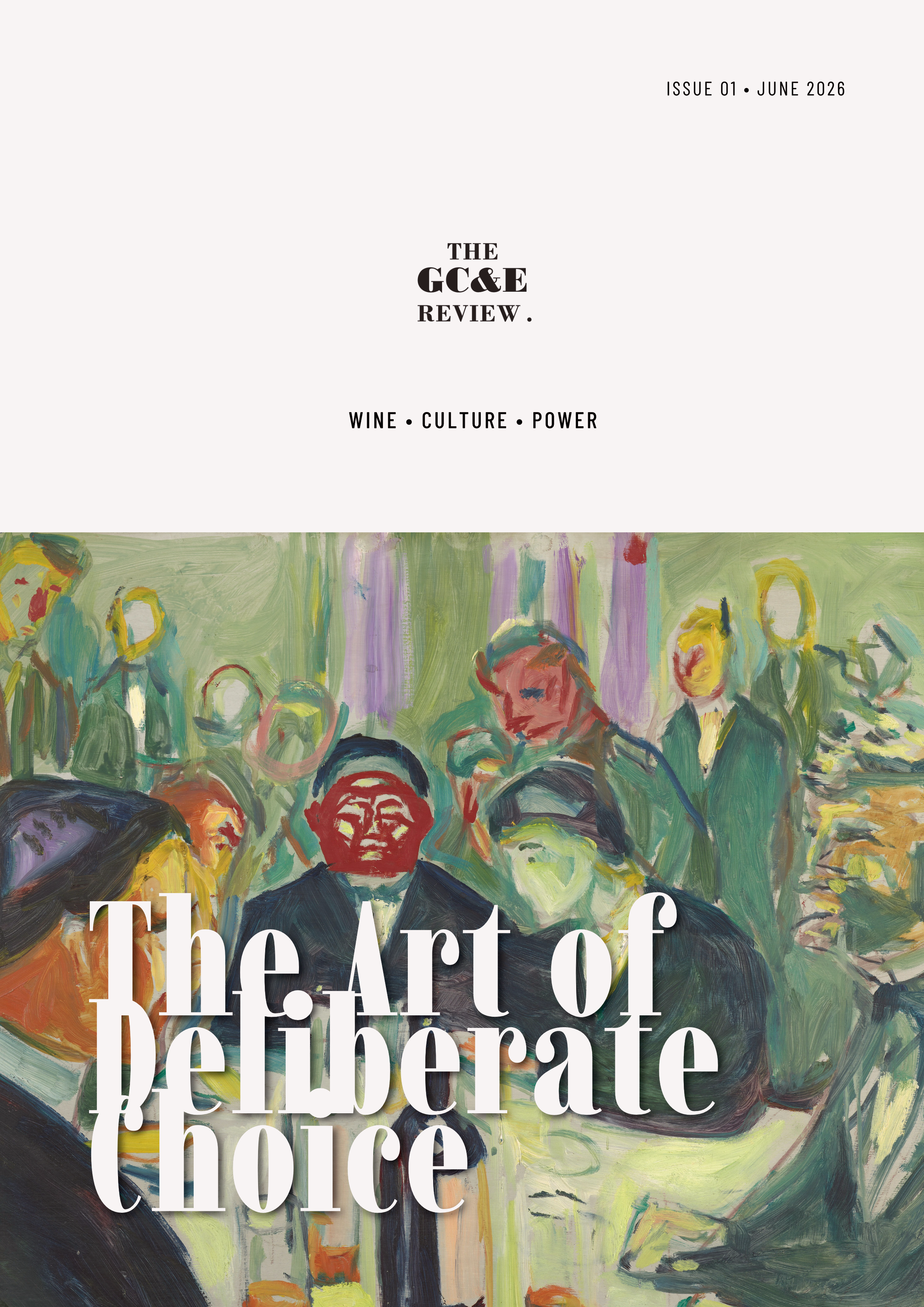
The first issue of The GC&E Review begins with a simple, unsettling idea: in a boardroom, what is truly decided is almost never said aloud. Power speaks softly — through the choice of a wine, a silence held a second too long, the seat one takes at the table. This issue is an initiation into that language no one teaches and everyone is expected to understand.
GET THE ISSUE →